The Day We Discover We Are Not Alone
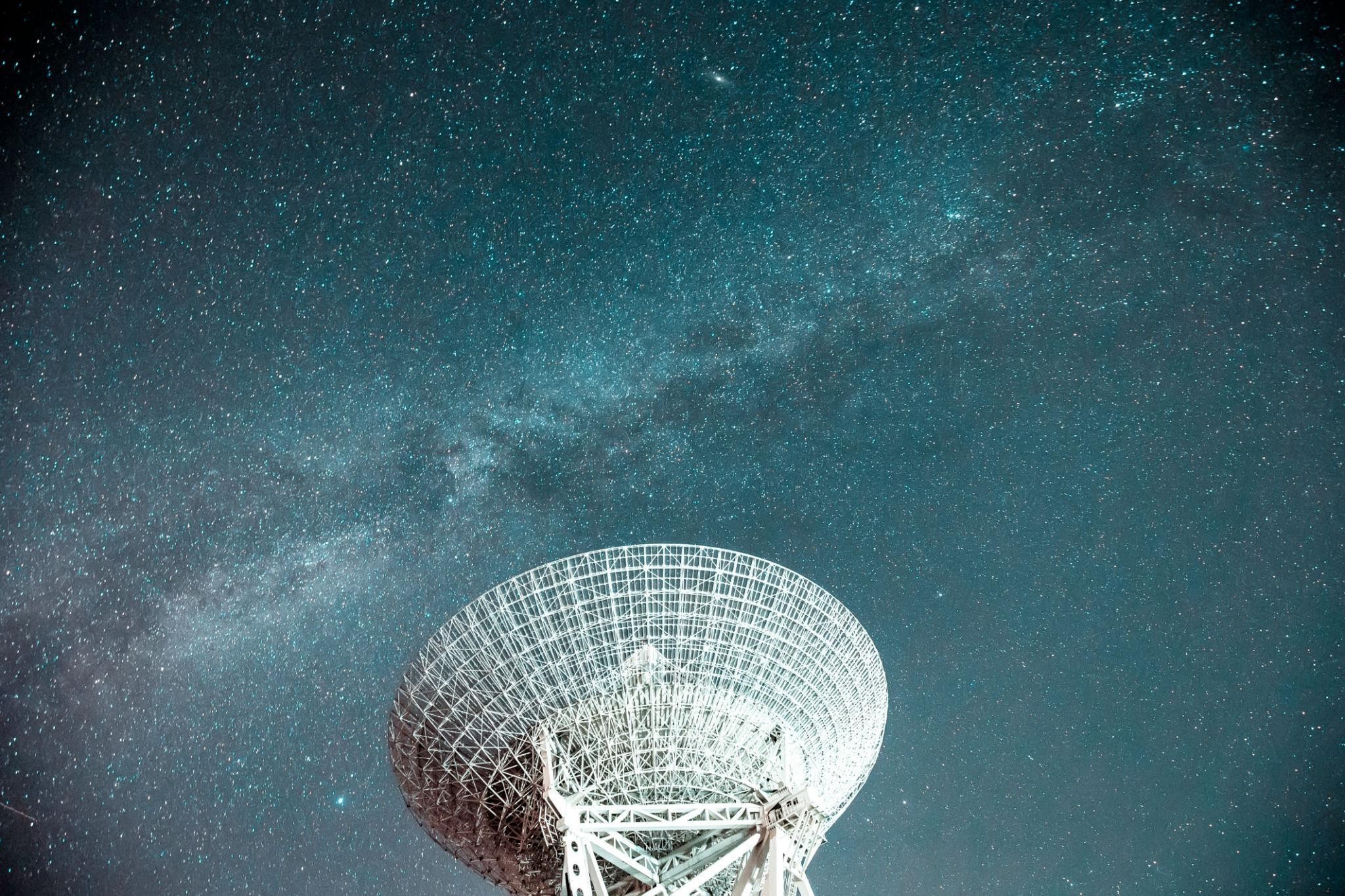
Imagine waking up tomorrow to a world united by a single headline: humanity has received a signal from another intelligent civilization. For generations, we have gazed at the stars wondering whether we are alone in the universe. Despite our scientific progress, the cosmos has remained silent until now. A confirmed extraterrestrial message would reshape our understanding of life, intelligence, and our place in the universe. Scientists would race to decode it, while philosophers, religious leaders, and governments would grapple with its implications. More than an astronomical discovery, it would be a turning point in human history. The day we receive that signal could become the moment that changes everything.
A Universe Too Large to Ignore
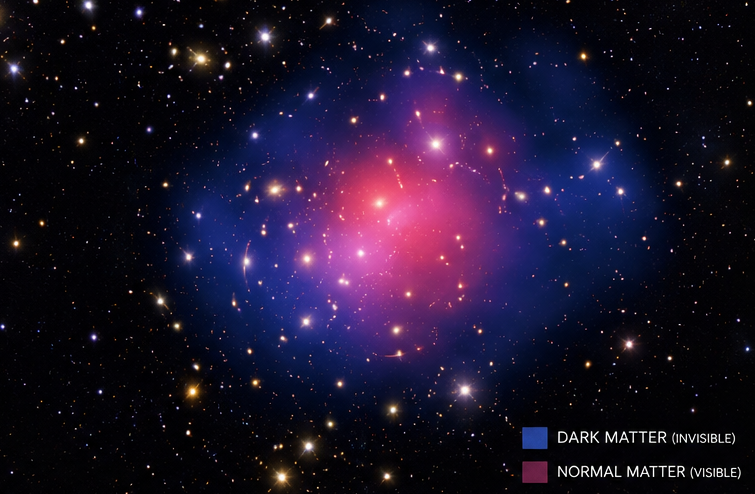
The observable universe contains trillions of galaxies, each home to countless stars and planets. Missions such as Kepler and TESS (Transiting Exoplanet Survey Satellite) have revealed thousands of exoplanets, many of which orbit within the habitable zone where liquid water could exist. More recently, the powerful James Webb Space Telescope has begun analyzing the atmospheres of distant worlds in search of potential signs of life. These discoveries suggest that planets capable of supporting life may be common throughout the galaxy. If life emerged on Earth, could it have emerged elsewhere as well? This question remains one of the greatest mysteries in modern astronomy and fuels humanity’s ongoing search for extraterrestrial intelligence.

The Fermi Paradox: Where Is Everybody?
In 1950, physicist Enrico Fermi posed a deceptively simple question:
“Where is everybody?”
Given the vast age and size of the universe, intelligent civilizations should have had ample time to emerge and spread across the galaxy. Yet we have found no confirmed evidence of their existence. No spacecraft, no artificial structures, no unmistakable messages, only silence. This contradiction is known as the Fermi Paradox. The paradox is fascinating because both possibilities are equally profound. Either intelligent life is extraordinarily rare or intelligent life is common, and we simply have not detected it yet. Receiving a signal tomorrow would instantly resolve one side of this paradox. It would confirm that intelligence has emerged elsewhere in the cosmos. And that realization alone would change everything.
How Would Scientists Know the Signal Is Real?
Contrary to popular science fiction movies, scientists would not immediately announce alien contact. Their first response would be skepticism. Extraordinary claims require extraordinary evidence. The signal would undergo extensive verification. Astronomers would check for equipment malfunctions. Engineers would investigate potential interference from satellites. Independent observatories around the world would attempt to detect the same signal. Only after eliminating every plausible natural explanation would researchers consider the possibility of extraterrestrial origin. This process could take weeks, months, or even years. Yet once confirmed, the announcement would likely be surprisingly simple: “We have detected a signal that appears to originate from a non human technological civilization.”
A single sentence. Perhaps the most important sentence humanity has ever heard.
The World's First Reaction
The scientific community would celebrate, the media would erupt, social media platforms would become flooded with theories, debates, and speculation. Some people would respond with excitement. Others with fear. Some would question the discovery. Others would immediately wonder what the message contains. Yet beneath the chaos, something remarkable might happen. For the first time, humanity would have a reason to view itself as a single civilization. The differences that often divide us are nationality, politics, language, and ideology, might suddenly seem smaller when compared to another intelligent species. Viewed from another star system, there are no borders visible on Earth. There is only one planet. One species, one shared home.
Could We Understand the Message?
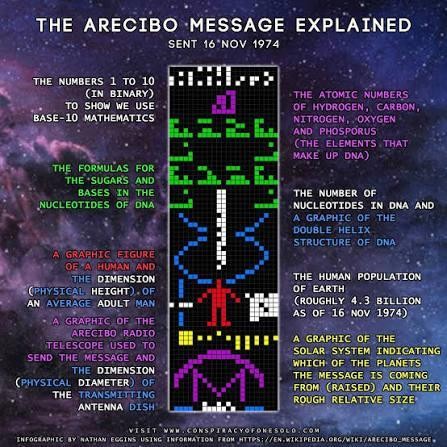
Receiving a signal from another civilization would be extraordinary but understanding it could prove even more challenging. Their language might be shaped by senses, experiences, and ways of thinking completely unlike our own. Fortunately, scientists believe mathematics may serve as a universal language, since concepts such as prime numbers, geometry, and the laws of physics remain constant throughout the universe. To decode the message, humanity would likely rely on artificial intelligence. Advanced AI systems could analyze vast amounts of data, detect hidden patterns, and explore possible meanings far faster than humans alone. In a fascinating twist, the same technology transforming our world today may become the key to communicating with the first extraterrestrial intelligence we ever encounter.
The Philosophical Shockwave
The greatest impact of the signal may not be scientific but philosophical. For thousands of years, humans have asked questions about purpose, meaning, and our place in the cosmos. The discovery of another civilization would force us to confront these questions from an entirely new perspective. Are we ordinary or extraordinary? Is consciousness a rare cosmic accident or a common outcome of evolution? What responsibilities come with being an intelligent species? The signal would not answer these questions. But it would make them impossible to ignore.
A Mirror Across the Stars
Perhaps the most beautiful consequence of receiving a signal is that it would reveal something about ourselves. The search for extraterrestrial life is ultimately a reflection of human curiosity. We search because we want to understand. We search because we hope we are part of something larger. We search because deep down, we want to know whether someone else has looked into the darkness and wondered the same things we do. The signal would not simply tell us that another civilization exists. It would remind us that curiosity itself may be a universal trait of intelligent life.
The Day Everything Changes
Tomorrow may come and go without a signal. The stars may remain silent. The universe may keep its secrets for another century. Yet someday, somewhere, a telescope may detect a message crossing the immense darkness between worlds. And in that moment, humanity’s oldest question will finally have an answer. Not through speculation, not through hope, not through imagination, but through evidence.The universe will no longer be a place where we wonder if we are alone. It will become a place where we know we are not. And perhaps that will be the beginning of humanity’s greatest journey. One that takes us not just across oceans or continents, but into a wider cosmic community waiting among the stars.

References
- Conselice, C. J., et al. (2016). “The Evolution of Galaxy Number Density at z < 8 and its Implications.” The Astrophysical Journal. [Link]
- NASA Exoplanet Exploration Program [Link]
- NASA Kepler Mission [Link]
- NASA Transiting Exoplanet Survey Satellite (TESS) [Link]
- NASA Exoplanet Exploration – Habitable Zone [Link]
- NASA – Search for Life / Fermi Paradox [Link]
- International Academy of Astronautics (IAA). SETI Post-Detection Protocols [Link]
- SETI Institute – The Arecibo Message [Link]
- NASA Frontier Development Lab [Link]